Server for vibe coding
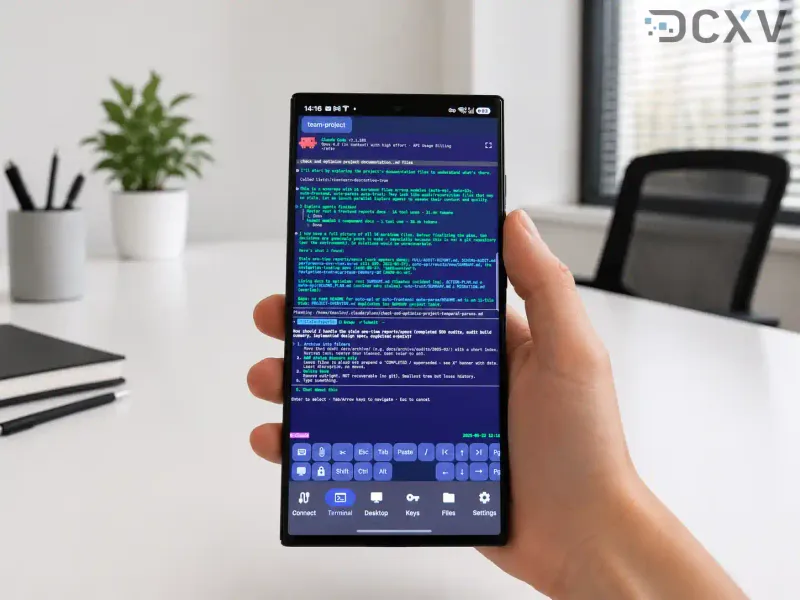
Your agent keeps working after you close the laptop, and the session is still there when you reconnect from somewhere else.
Who it is for
A developer who works alongside an agent all day
The run stops the moment the laptop sleeps, and a refactor that was twenty minutes in starts over.
Someone who moves between devices
You start at a desk, continue on a laptop, check progress from a phone, and the session lives on none of them.
Someone who has already given an agent too much access
It did something irreversible on the same machine that holds your real work and your keys.
What you run on it
- Claude Code, Codex, OpenCode, Gemini CLI, Grok CLI, Aider or whichever agent you have settled on
- A tmux or screen session that survives a disconnect, so the work continues while you are away from it
- Headless Chromium for browser automation, which is the part that actually needs the memory
- Docker, so the agent builds and runs tests in a container instead of on your own machine
- Your own dotfiles, keys, language runtimes and toolchain, on a box you have root on
- A snapshot taken before you widen what the agent may touch, rolled back in two clicks
Sized by what the agent does
Two vCPU and 4 GB is enough for editing and running code. The moment an agent drives a browser, budget 8 GB: each Chromium session takes 2 to 4 GB on its own, and this is the single most common reason a cheap agent box starts swapping.
What is and is not included
- Model access is not included. Your Claude, OpenAI, Gemini or other subscription and API keys stay yours, and the spend is billed by them, not by us.
- This is not a managed agent runtime. It is a server with root access, so you install and update the CLI you want at the version you want.
- We do not read your code, and we cannot recover it for you if you delete it without a snapshot. Take one before anything irreversible.
- Scraping at scale, credential stuffing and bulk messaging are outside our acceptable use policy, whether a person or an agent is doing it.
What actually matters when an agent lives on a server
- Memory, not cores, is the usual limit. An agent editing code is comfortable in 4 GB; add a browser and 8 GB is the floor.
- tmux plus SSH is the whole trick: attach, detach, reattach from another machine and the session never noticed. mosh is worth installing if you reconnect over mobile.
- Snapshot, experiment, roll back. That is the working loop once something on the machine can act on its own, and it is the reason to keep the agent off your laptop.
- Before you hand over root: a non-root user, an egress allowlist, secrets outside the repository, and a spending cap on the API key.
- Data centre addresses collect captchas. Ours are clean, with rDNS you can set, which is what keeps an agent that browses from being treated as a bot.
- Monthly billing, no minimum term. The cheap agent hosts advertise a low headline rate against a 24-month commitment and renew at roughly double.
On your laptop versus on a server
| Agent on your laptop | Agent on a DCXV server | |
|---|---|---|
| When you close the lid | The run stops | The work carries on |
| Moving to another device | Start the task again | Reattach the same session |
| A destructive mistake | Happens on your working machine | Snapshot rollback in two clicks |
| Browser automation | Competes with your own browser and battery | Its own memory and CPU |
| Getting captcha-blocked | Your home address, once flagged | A clean static address with rDNS |
| Cost | Nothing, until something breaks | From EUR 15/mo, monthly, no lock-in |
What an always-on agent costs elsewhere
| Hostinger KVM 2 | DCXV | |
|---|---|---|
| Advertised price | USD 8.79 per month | EUR 18.43 per month |
| Price after the introductory term | USD 14.99 per month | EUR 18.43, unchanged |
| What you commit to | 24 months, paid up front | One month at a time |
| Processor and memory | 2 vCPU, 8 GB | 4 vCPU, 8 GB |
| Disk | 100 GB NVMe | 80 GB NVMe |
| Backups | Weekly, included | One included, daily retention up to 7 days |
| IPv4 address | One included | One static, on our own AS204057 |
Hostinger is the productised end of this market and the comparison worth making, because the price on the button and the price you pay are two different numbers. The genuinely cheap end - Hetzner, Contabo and the hosts at two to six dollars - costs less per gigabyte than we do, and we are not going to pretend otherwise; Hetzner raised cloud prices in April 2026, so check the current figure yourself rather than trusting a review site. What the difference buys here is a monthly commitment instead of a two-year prepay, an address on our own AS rather than a shared provider range, a backup in the price, and people on support around the clock. If cost per gigabyte is the only axis that matters for your agent, take the cheaper box - it will run Claude Code perfectly well.
Getting set up
Pick a size
One agent, one agent with a browser, or several at once. If you are unsure, start at 4 GB and add memory later without a reinstall.
We hand over the server
A cloud VM in Prague or Covilha, deployed in minutes, with root access, a static address and the distribution you asked for.
Bring your setup across
Your dotfiles, your keys, your runtimes, the CLI at the version you use. Nothing here is preinstalled or pinned by us.
Snapshot, then widen access
Take the snapshot first, then give the agent the permissions it needs. In that order the worst case is a two-click rollback.
Why choose us
- Tier III certified facilities, 99.982% facility SLA
- Own network, AS204057, IPv4 and IPv6 dual-stack
- 24/7/365 support with ~10 minute average response
- Cyprus company, EU jurisdiction, GDPR-native since 2007
FAQ
Frequently asked questions
How much does a server for vibe coding cost?
From EUR 15 per month for 2 vCPU, 4 GB RAM, 40 GB NVMe and a static IPv4, which is enough for an agent editing, building and running tests. An agent that also drives a browser wants 8 GB, at EUR 18.43, and running several sessions at once is EUR 36.88 for 8 vCPU and 16 GB. Monthly billing, no minimum term
How much memory does an AI coding agent actually need?
Four gigabytes is comfortable while the agent is only reading, writing and running code. The number changes the moment it opens a browser: each headless Chromium session takes roughly 2 to 4 GB by itself, so 8 GB is the realistic floor for web automation or end-to-end tests. CPU is rarely the constraint, memory almost always is
Which agents can I run?
Any of them. Claude Code, Codex, OpenCode, Gemini CLI, Grok CLI and Aider all run on a plain Linux server, and you install the one you want at the version you want because you have root. We do not preinstall or pin anything, so nothing here goes stale when a tool releases
Does the agent keep working when I close my laptop?
That is the reason to use a server. Run the agent inside tmux or screen and the session belongs to the server, not to your connection: close the lid, and the task carries on. Reattach later from a different machine, or from a phone, and you are looking at the same session. mosh is worth installing if you reconnect over mobile networks
Is my API subscription included?
No, and that is deliberate. Your Claude, OpenAI or Gemini account stays yours and the model spend is billed by them. What you are renting here is the machine the agent runs on. Put a spending cap on the key before you leave an agent running unattended: a retry loop against a paid API is the most expensive bug in this field
What happens if the agent breaks something?
Take a snapshot before you widen what it may touch, and a bad outcome becomes a two-click rollback. That loop, snapshot then experiment then roll back, is the main reason to keep an agent off the machine that holds your real work and your keys
If you require assistance or have additional questions, please contact the managers or write to the support team at support@dcxv.com
Ready to get started?
- Monthly billing
- No setup fee
- No lock-in