IPv4 Price Per IP Address in 2026
The IPv4 address market has matured significantly since the exhaustion of free pool allocations. In 2026, buying individual IP addresses or small blocks remains a common requirement for businesses, hosters, and network operators worldwide. Understanding the per-IP price across different registries helps buyers plan acquisitions more accurately.
Price Ranges per IP We Saw in April 2026
Prices vary by registry region, block size, and the reputation of the address space. Smaller blocks typically carry a higher per-IP premium compared to large transfers.
| Region | Block Size | Price Range per IP (April 2026) |
|---|---|---|
| RIPE NCC | /24 (256 IPs) | $40 - $55 |
| RIPE NCC | /22 (1024 IPs) | $38 - $52 |
| ARIN | /24 (256 IPs) | $42 - $58 |
| ARIN | /22 (1024 IPs) | $40 - $55 |
| APNIC | /24 (256 IPs) | $35 - $50 |
These are the ranges we saw in our own brokerage deal flow in April 2026, not a quote and not a present-day price. What a block actually trades for depends on its cleanliness, its routing history and demand at the moment of the deal. For what we publish today, see IPv4 pricing.
These are indicative ranges only. Actual transaction prices depend on block cleanliness, routing history, and current market demand. Contact ipv4@dcxv.com for a current quote. https://dcxv.com/ipv4/pricing
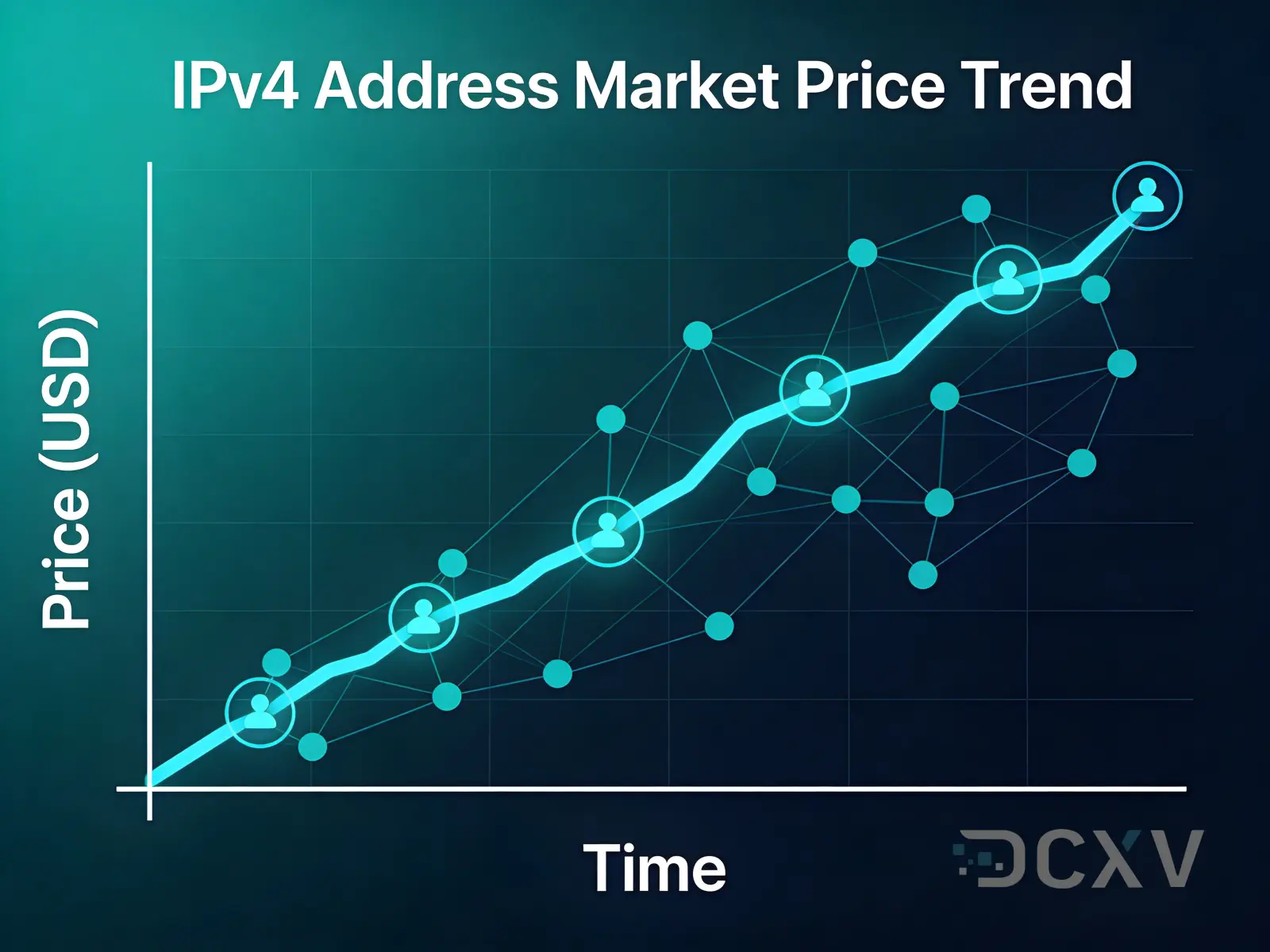
Price Trend 2022-2026
The IPv4 market saw sharp price increases between 2020 and 2022 as demand surged and large institutional holders sold off excess allocations. Between 2022 and 2024, the market stabilized with mild fluctuations. In 2025 and into 2026, prices have held relatively steady in the RIPE region while slight softening has been observed in ARIN due to increased supply from corporate legacy holders returning addresses.
Key trend indicators:
- RIPE NCC prices remain firm due to persistent demand from European hosting and cloud providers
- ARIN market sees moderate supply increase from legacy holders
- APNIC prices remain competitive but demand from Asia-Pacific cloud growth keeps them supported
What Affects IPv4 Price
Several factors determine the per-IP price beyond the simple supply and demand dynamic:
Block size: Larger blocks cost less per IP. A /16 acquisition will have a lower per-IP price than a /24.
Registry region: RIPE and ARIN addresses command a premium over APNIC in many use cases. This is driven by the geographic target market of the buyer.
Routing history: Clean, well-maintained blocks with no blacklist history are worth more. Addresses that have been used for spam or abuse may require additional remediation.
Transfer approval timeline: Expedited transfers or blocks that are pre-cleared for transfer may carry a small premium.
Seller motivation: Distressed sellers or organizations simplifying their IP portfolios may offer below-market pricing.
Price Difference: RIPE vs ARIN vs APNIC
RIPE NCC addresses are predominantly used by European operators. They are subject to RIPE NCC transfer policies and require both buyer and seller to be RIPE members or to work through a broker. DCXV is a RIPE NCC member and can facilitate transfers directly.
ARIN addresses serve North American operators. ARIN transfer policies differ from RIPE, and the needs justification requirement for new ARIN allocations has historically pushed more buyers toward the transfer market.
APNIC addresses cover the Asia-Pacific region. Prices tend to be slightly lower on a per-IP basis, but buyers targeting European or North American audiences often prefer RIPE or ARIN space for reputation and routing reasons.
How to Get a Current Quote
DCXV is an IPv4 transfer broker for the RIPE NCC, APNIC and ARIN regions. We operate from locations in Czechia and Portugal, with AS204057 enabling direct routing verification for buyers.
To receive a current per-IP price quote:
- Specify the block size you need (number of IPs or CIDR prefix)
- Indicate your preferred registry region
- Mention any routing or geographic requirements
Contact us at ipv4@dcxv.com with your requirements. We respond within one business day and provide transparent pricing with no hidden fees. https://dcxv.com/ipv4/pricing