IPv4 Lease Price vs Buy Price Comparison
Organizations needing IPv4 addresses have two primary paths: purchasing blocks outright on the secondary market, or leasing addresses from holders who are not using them. Each approach has different economics, risk profiles, and operational implications. This guide compares both options to help you make the right decision for your situation.
Prices and Lease Rates We Saw in April 2026
| Option | /24 (256 IPs), April 2026 | /22 (1,024 IPs), April 2026 |
|---|---|---|
| Buy (RIPE, per IP) | $40 - $54 | $38 - $52 |
| Buy (ARIN, per IP) | $42 - $58 | $40 - $55 |
| Monthly Lease (per IP) | $0.40 - $0.80 | $0.35 - $0.70 |
Note: lease rates are monthly per-IP figures. Total monthly lease cost for a /24 at mid-range rates would be approximately $140-$200/month. These are the sale prices and lease rates we saw in our own brokerage deal flow in April 2026, not a quote and not a present-day price. What a block actually trades or leases for depends on its cleanliness, its routing history and demand at the moment of the deal. For what we publish today, see IPv4 pricing.
Price Trend 2022-2026
Both purchase prices and lease rates have followed the general IPv4 market through the 2020-2026 cycle. Lease rates peaked around 2021-2022 as purchase prices climbed, then moderated slightly through 2023. In 2024-2026, lease rates have been more stable than purchase prices, sitting in the $0.40-$0.80/IP/month range for /24 RIPE blocks. Purchase prices have recovered toward 2021 levels, which has widened the buy-vs-lease calculation for short-term users.
What Affects IPv4 Lease vs Buy Decision
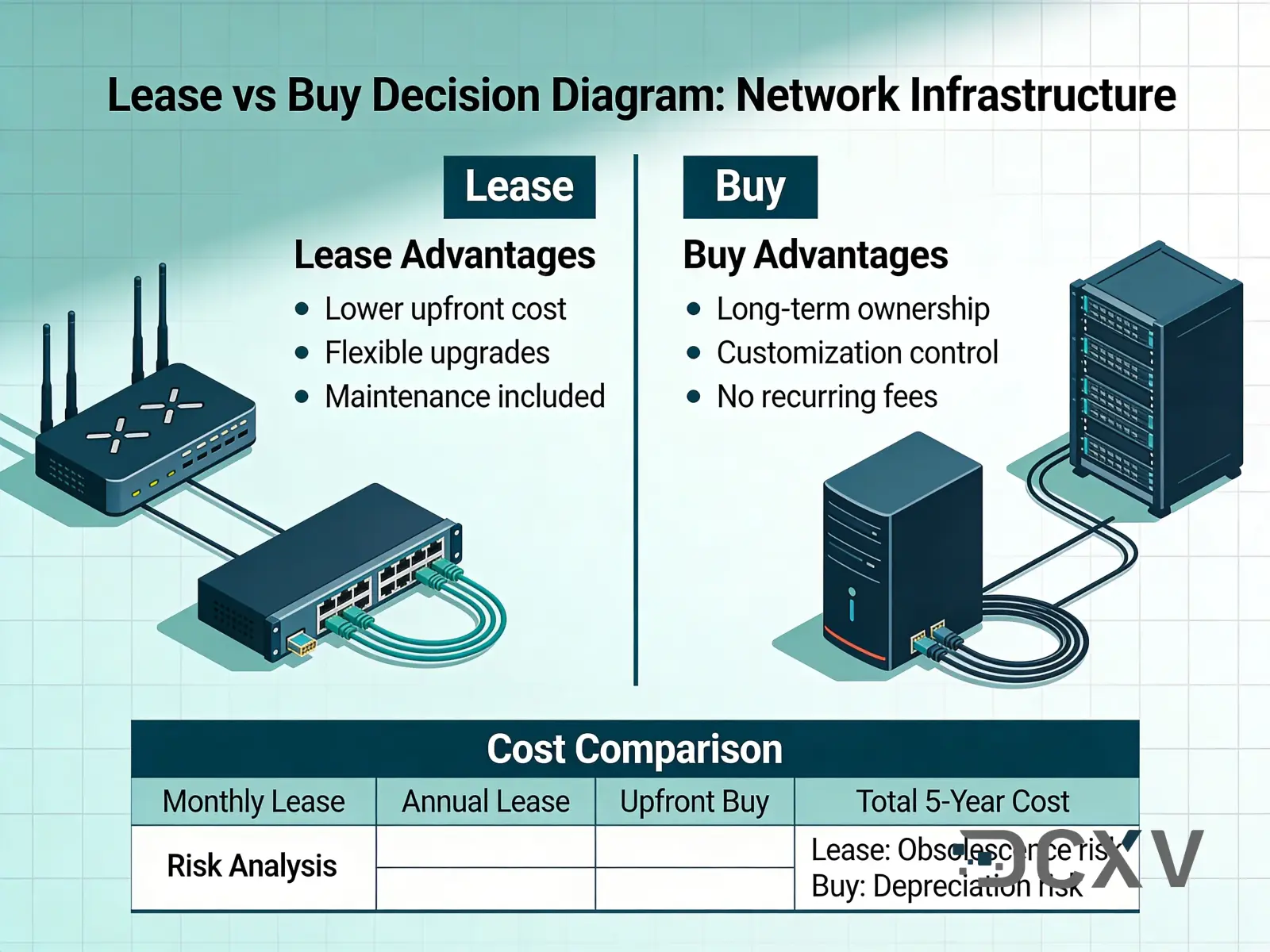
Duration of need - For short-term requirements under 12 months, leasing almost always makes financial sense. For requirements of three to five years or more, purchasing typically provides better total cost of ownership. At the April 2026 prices above, the break-even point sits in the 48-72 month range for RIPE space.
Block quality requirements - Buyers can select blocks based on routing history and WHOIS cleanliness. Lease arrangements typically involve accepting whatever block the lessor provides, which may require additional reputation remediation costs not reflected in the headline lease rate.
Capital availability - Purchasing a /22 in the RIPE region at the April 2026 prices above would have required a capital outlay in the $40,000-$55,000 range. For organizations with limited capital budgets or who prefer OpEx over CapEx, leasing provides access to addresses without the upfront cost.
Asset appreciation - IPv4 addresses have historically appreciated in value. Organizations that purchased in 2019-2020 have seen significant unrealized gains. Lessees gain no benefit from appreciation. Buyers carry the upside and downside of market movements.
Transfer and administrative overhead - Purchasing involves a RIPE NCC or other RIR transfer process, legal documentation, and one-time administrative cost. Leasing typically involves a service agreement with faster setup but ongoing monthly billing and potential operational dependency on the lessor.
Price Difference: RIPE vs ARIN vs APNIC
For purchases, ARIN space commands 5-15% premium over RIPE and 10-25% premium over APNIC. Lease rates follow a similar pattern, with ARIN lease rates typically 10-20% above RIPE rates, reflecting the underlying asset value differential. APNIC leases can offer value for Asia-Pacific-focused operations.
How to Get a Current Quote
DCXV can advise on both lease and purchase options for IPv4 addresses across RIPE NCC, ARIN, and APNIC regions. Our team can model the total cost of ownership for your specific block size requirement, duration estimate, and regional preference, helping you make a data-driven decision between leasing and buying.
For a comparison quote covering both options, contact us at ipv4@dcxv.com with your block size, region, and expected duration of need. https://dcxv.com/ipv4