Cloud Server for Python Flask in Europe
Flask is one of the most popular Python web frameworks for building APIs and microservices. It is lightweight, flexible, and easy to deploy. But where you deploy matters as much as how you deploy. For European users and GDPR compliance, running Flask on a European server is the right call.
Why EU hosting matters for Python Flask
Flask APIs that serve European users benefit directly from shorter network paths. A REST API hosted in the EU can respond to requests from Berlin, Warsaw, or Amsterdam in under 10ms of network time. The same API hosted in a US data center adds 80-120ms just in transit.
GDPR applies when your Flask application handles personal data from EU residents. This includes user authentication, order processing, contact forms, or any endpoint that stores identifiable information. Running your backend within the EU simplifies data residency compliance and removes the need for Standard Contractual Clauses for transatlantic transfers.
Flask is also commonly used for internal microservices within larger architectures. If the rest of your stack is EU-hosted, keeping Flask in the EU reduces inter-service latency and keeps your architecture consistent from a compliance standpoint.
Minimum server requirements
One of Flask's strengths is its low resource footprint. A basic Flask application with Gunicorn can run comfortably on modest hardware.
- RAM - 1 GB minimum for a simple Flask API with SQLite. For PostgreSQL-backed applications with multiple Gunicorn workers, 2 GB is more practical.
- CPU - 1 core is technically enough, but 2 cores let you run Gunicorn with multiple worker processes, improving throughput under concurrent load.
- Disk - 10 GB minimum. Flask apps themselves are small; the disk is mostly used by PostgreSQL data and logs.
- Python - Version 3.10 or later. Python 3.12 is the current recommended version with improved performance.
- OS - Ubuntu 22.04 LTS is the most supported platform for Flask production deployments.
Recommended DCXV configuration
DCXV cloud VPS plans start at EUR 15/month and cover the full minimum requirement for a Flask API. The entry-level plan gives you dedicated resources in an EU Tier III data center - no noisy neighbors throttling your CPU when traffic spikes.
For Flask applications serving production traffic with a PostgreSQL database, the 2-core / 2 GB RAM plan is the sweet spot. It supports 4-8 Gunicorn workers and handles hundreds of requests per second for typical API workloads.
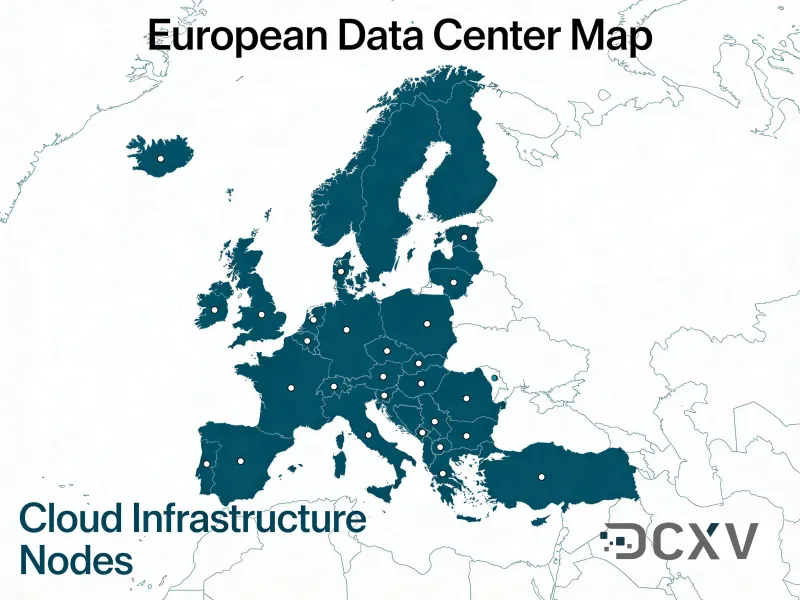
Data center locations in Czechia and Portugal cover Central and Eastern Europe well. 24/7 engineer support is included in every plan - if something breaks at 3am, you reach an engineer, not a ticket queue. See plans at https://dcxv.com/data-center#cloud
Setup guide
The following steps deploy a Flask app with Gunicorn on Ubuntu 22.04. PostgreSQL installation is included for database-backed applications.
# Install Python 3.12 and PostgreSQL
sudo apt update && sudo apt install -y python3.12 python3.12-venv python3-pip postgresql postgresql-contrib nginx

# Create a virtual environment and install Flask
python3.12 -m venv /var/www/flaskapp/venv
source /var/www/flaskapp/venv/bin/activate
pip install flask gunicorn psycopg2-binary

# Create a systemd service for Gunicorn
sudo nano /etc/systemd/system/flaskapp.service
# ExecStart=/var/www/flaskapp/venv/bin/gunicorn --workers 4 --bind unix:/tmp/flaskapp.sock app:app

# Enable and start the service
sudo systemctl daemon-reload
sudo systemctl enable flaskapp && sudo systemctl start flaskapp

# Configure Nginx to proxy to the socket
sudo nano /etc/nginx/sites-available/flaskapp
# proxy_pass http://unix:/tmp/flaskapp.sock
sudo ln -s /etc/nginx/sites-available/flaskapp /etc/nginx/sites-enabled/
sudo nginx -t && sudo systemctl reload nginx
Performance expectations
Flask with Gunicorn on a 2-core / 2 GB instance in Prague delivers solid numbers for API workloads:
- Response time - 5-15ms for simple JSON endpoints with in-memory data. Database-backed endpoints with PostgreSQL typically run 10-30ms.
- Throughput - 500-1200 requests per second with 4 Gunicorn workers for CPU-light endpoints. Heavy computation or ORM queries will be lower.
- Network latency to EU users - Under 20ms to most Western and Central European locations from Prague.
- Scalability - Adding more Gunicorn workers scales linearly until you hit CPU limits. Upgrading to more cores extends that ceiling without changing your application code.
Flask's lightweight nature means you get strong performance per euro spent. It is one of the most cost-efficient frameworks to host in the cloud.
These are expectations for hardware of this class, not measurements from our own lab. Treat them as a starting point for sizing and measure your own workload: real numbers depend on your data, your queries and your tuning far more than on the provider.