Cloud Server for Laravel in Europe
Laravel is the most popular PHP framework for web applications. When your audience is in Europe, hosting your Laravel app within EU borders is both a GDPR requirement and a practical way to deliver fast page loads. This guide covers the server specs, a quick setup walkthrough, and how DCXV cloud supports Laravel workloads.
Why EU hosting matters for Laravel
Laravel applications handle forms, authentication, e-commerce transactions, and stored user profiles. All of this qualifies as personal data under GDPR. EU law requires that this data be processed on infrastructure located within the European Economic Area unless you have a documented legal basis for cross-border transfer.
Beyond compliance, latency has a real impact on user experience. A Laravel app served from Prague reaches users in Germany, Austria, Poland, or Slovakia with under 20ms round-trip. Hosting on a US east coast server adds 90-110ms per request before PHP even starts executing. For a page that makes 10 database queries and a few Redis lookups, that difference is noticeable on every click.
Minimum server requirements
Laravel with PHP 8.2, Composer, MySQL or PostgreSQL, and a queue driver needs more than a basic VPS:
- RAM - 2 GB minimum for a standard web app with MySQL on the same server. 4 GB recommended for apps using Redis for session storage and queue workers running simultaneously.
- CPU - 2 vCPUs for most production workloads. 4 vCPUs if you run Horizon or multiple queue workers alongside web traffic.
- Disk - 20-40 GB SSD. Laravel logs, storage uploads, and database files grow quickly on active apps.
- PHP - Version 8.2 or 8.3. Older PHP versions lack performance improvements and security patches that matter for production.
Recommended DCXV configuration
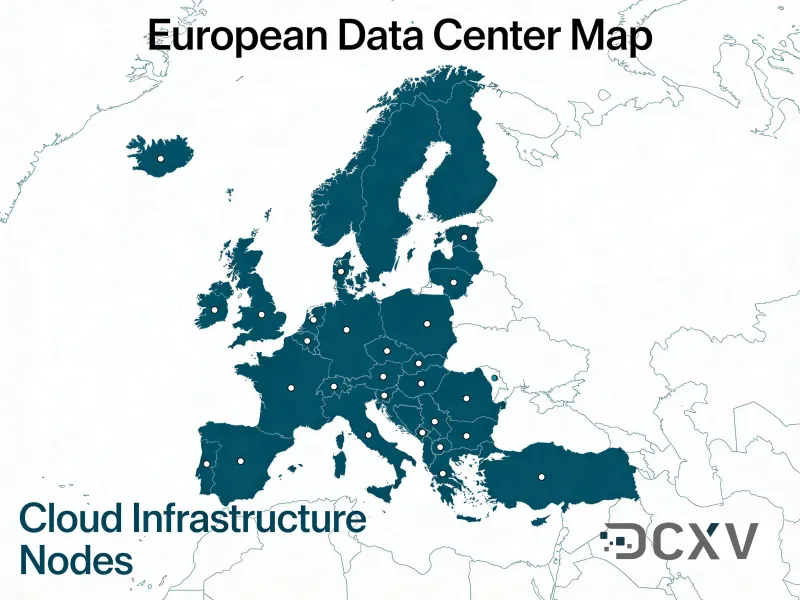
DCXV operates Tier III data centers in Czechia and Portugal, both inside the EU. Cloud VPS plans start at EUR 15/month and include 24/7 engineer support with no extra fees - real engineers who can help debug your Nginx config or PHP-FPM pool settings.
For a typical Laravel app with moderate traffic, 2 vCPU / 4 GB RAM is a comfortable starting point. If you use Laravel Horizon, run multiple queue workers, or store Redis sessions in addition to cache, plan for 8 GB. Dedicated bare-metal servers are available from EUR 49/month when shared hardware is not suitable.
Start here: https://dcxv.com/data-center#cloud
Contact: sales@dcxv.com
Setup guide
After provisioning your DCXV cloud server (Ubuntu 22.04), run these commands:
apt update && apt install -y nginx mysql-server redis-server php8.2-fpm php8.2-mysql php8.2-redis php8.2-mbstring php8.2-xml php8.2-curl unzip
curl -sS https://getcomposer.org/installer | php && mv composer.phar /usr/local/bin/composer
composer create-project laravel/laravel /srv/myapp
chown -R www-data:www-data /srv/myapp/storage /srv/myapp/bootstrap/cache
php /srv/myapp/artisan migrate --force
Then configure Nginx to serve your Laravel public directory and set up a systemd service for php artisan queue:work if you use queues.
Performance expectations
On a 2 vCPU / 4 GB cloud instance in Prague, a typical Laravel app with MySQL can serve 300-600 requests per second for cached routes. Uncached controller responses with database queries run at 50-150ms depending on query count and complexity. Redis session lookups add under 1ms. Laravel Horizon can process 500-1000 jobs per minute on a single worker depending on job complexity. Round-trip latency from Frankfurt or Vienna to the server is typically 8-15ms.
These are expectations for hardware of this class, not measurements from our own lab. Treat them as a starting point for sizing and measure your own workload: real numbers depend on your data, your queries and your tuning far more than on the provider.